
An AI assistant is most useful when it solves a clearly defined problem. Instead of starting with a system that promises to do everything, choose one task your team repeats: summarising incoming requests, preparing a first draft, or finding the right internal document.
Choose the smallest useful workflow
A workflow follows a planned sequence; an agent can choose its next steps more dynamically. That extra flexibility introduces more decisions to test. For a first project, a predictable sequence with a review step is often easier to evaluate.
Keep people in control
Consider a support assistant that reads a request, suggests a category and prepares a reply. Let a team member approve the answer before it is sent. Give the system only the tools and information needed for that task. Actions such as refunds, record deletion or account changes should have explicit approval rules.
Measure usefulness, not novelty
Our suggested pilot: collect representative requests, define what a good answer looks like, and compare the assistant with the existing process. Track correction effort, completion time and failures. Include ambiguous requests and cases that should be escalated. A polished demo is not evidence that every real request will work.
A sensible first release
Start with a small internal audience, show the draft clearly, and make reporting mistakes easy. Keep a manual fallback. Expand the scope only after the pilot demonstrates value against the baseline you selected.
Further reading: Anthropic: Building effective agents.
 AI & INSIGHT
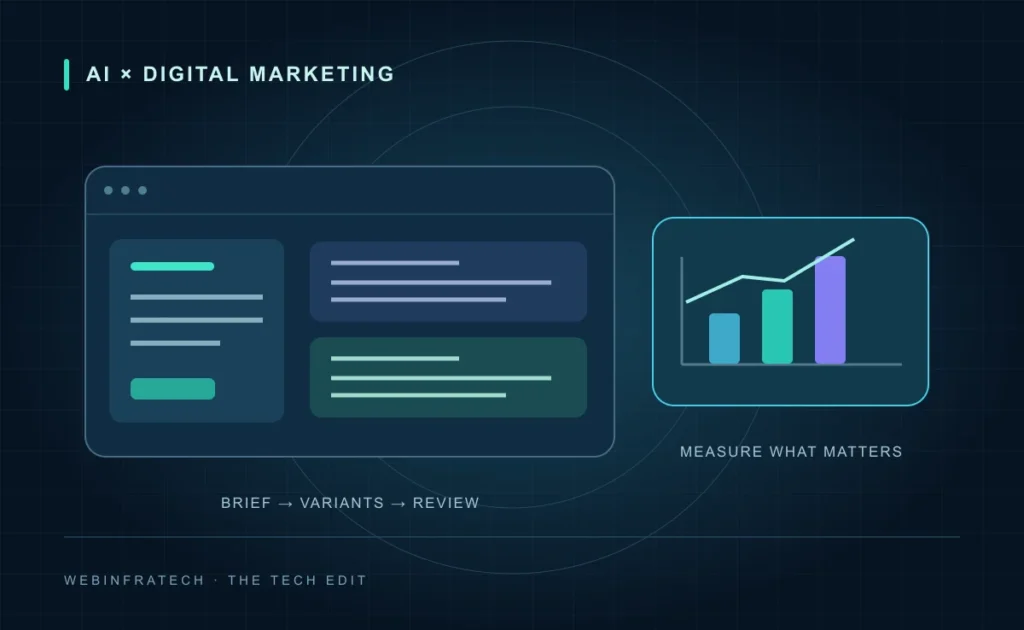
AI Digital Marketing: A Practical Campaign Workflow
Use AI to support campaign research, content drafts and analysis while keeping brand checks, accurate offers and meaningful lead measurement in place.
Read article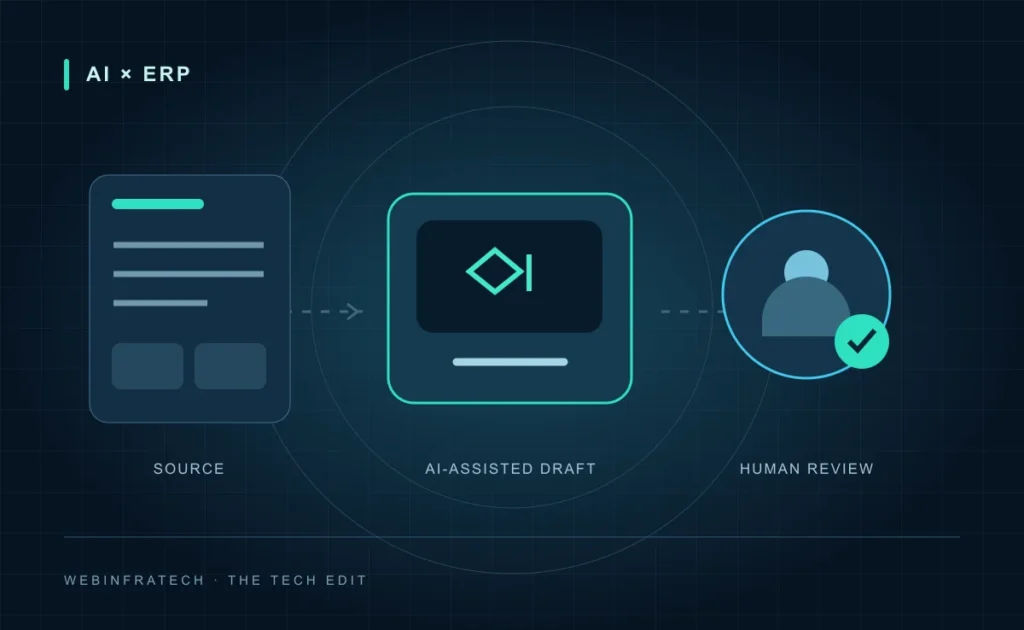 AI & INSIGHT
AI in ERP: Automate Workflows Without Losing Control
A practical guide to AI and ERP integration: choose a useful workflow, protect business data, keep approvals intact and measure results before scaling.
Read article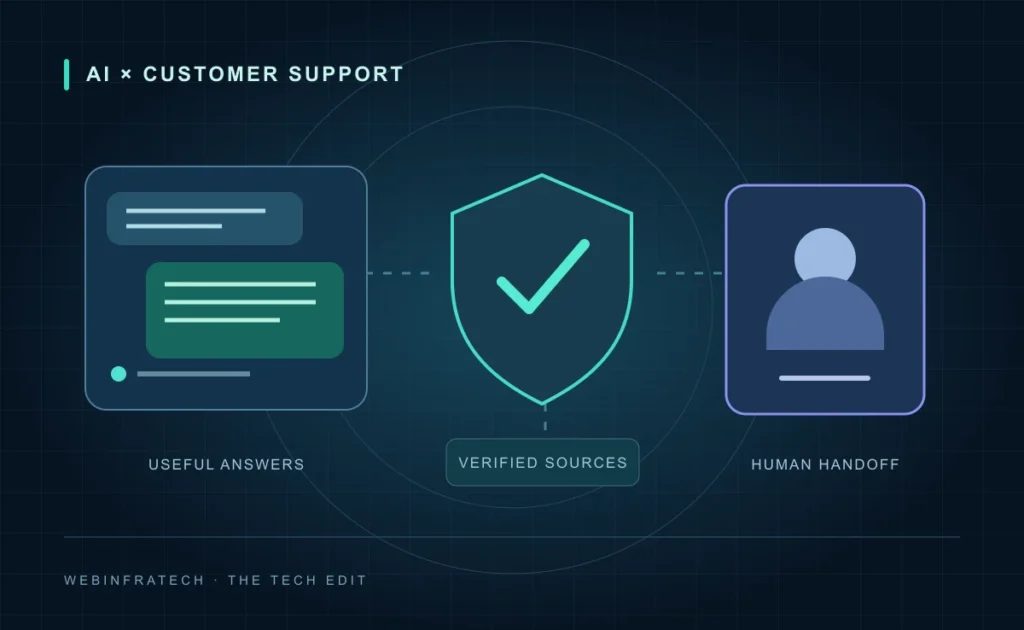 AI & INSIGHT
AI Customer Support Chatbots: Plan a Reliable Launch
Plan an AI support chatbot around trusted answers, protected customer data and a useful human handoff, with realistic tests before and after launch.
Read article